CRM for Australian small businesses · Built in Australia
A CRM for small business — where the customer, the booking and the invoice are one record.
Most CRMs are built for sales teams: pipelines, deal stages, forecasts. A small service business needs something plainer and more useful — every customer in one place, with what they booked, what you did, what they paid and what you said to each other, without paying a full subscription for every person who needs to see it. Trimsy is that CRM, with the bookings, jobs, invoices and payments built in rather than bolted on.
Customer details in a phone, a spreadsheet, an inbox and someone’s head — and no two of them agree
A CRM priced at $30 or more per user, so the people who most need the customer history are the ones left off it
A sales CRM in one tab and the booking system in another, with you retyping between them
Enquiries that arrive while you are busy and are never followed up
No idea who has not been back in six months, until they have gone somewhere else
A tool built for a fifty-person sales team, set up over a quarter, used for a fortnight
With Trimsy
What changes
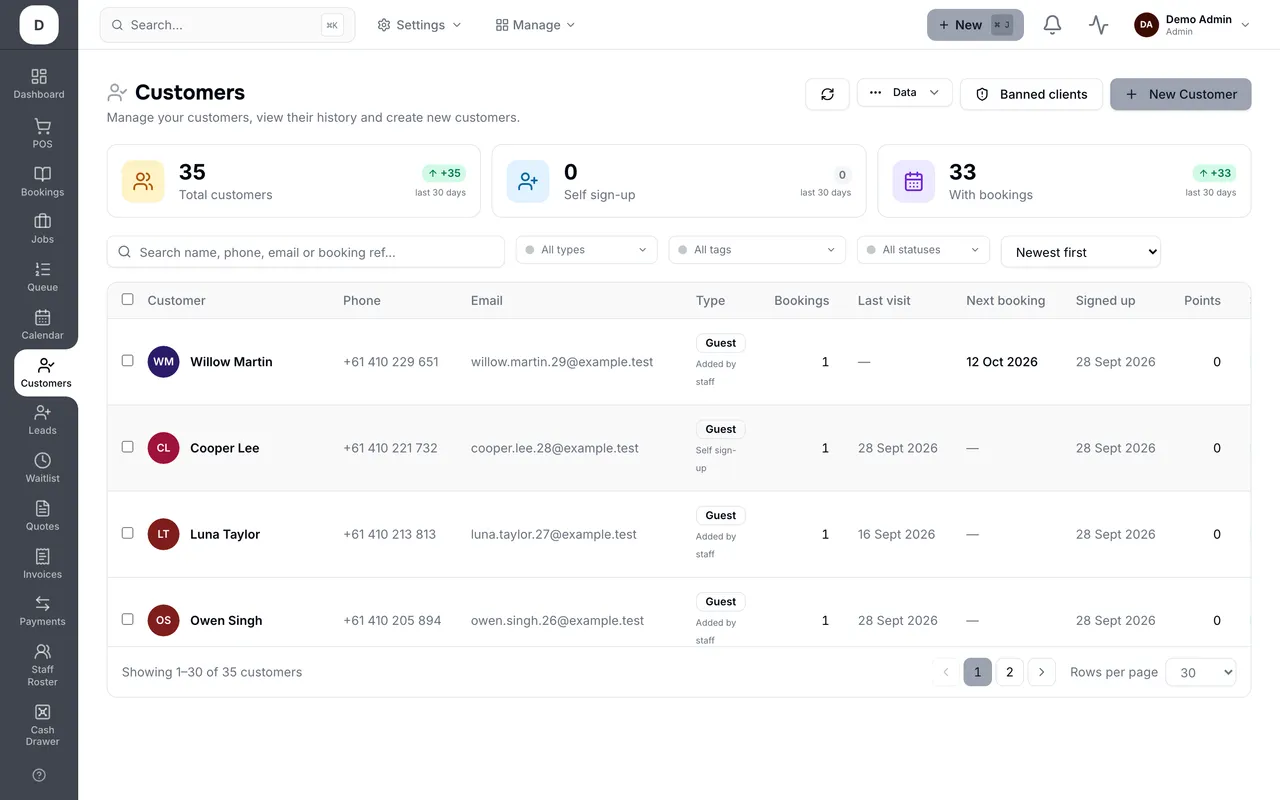
One file per customer: bookings, jobs, quotes, invoices, payments, messages, photos and notes on one screen
Staff are included in the plan and an extra seat is $7 a month — cheap enough that nobody gets left off the customer record
The booking, the job and the invoice write to the customer file themselves; nothing is retyped
Every enquiry lands in one list with an owner and a follow-up date
See who is overdue for a visit and bring them back with a reminder, before they drift
Set up in an afternoon, with your own fields and your own stages — not a consultant’s
The same CRM, shaped to the way you work
A customer record means something different to a groomer, a plumber and a migration agent. The fields, stages and history adapt to each.
Appointment businesses
Salons, clinics, groomers, studios, tutors — where the relationship is a run of visits.
Visit history, preferences and notes on the customer, ready before they walk in
Loyalty points and rebooking reminders that bring regulars back on schedule
Customers manage their own bookings and details in a self-service portal
Trades and field services
Plumbers, electricians, cleaners, pest control — where the relationship is a property and its jobs.
Property history that stays with the address even when the owner changes
Lead → quote → job → invoice, carried across without retyping
A follow-up date on every quote, with overdue ones at the top of the list
Professional services
Migration agents, brokers, consultants — where the relationship is a file of documents and deadlines.
Custom fields for what your work actually tracks
Documents, agreements and e-signatures stored on the client
Every email and SMS threaded onto the record, not lost in one person’s inbox
Why it matters
A CRM is only as good as what gets written into it
The reason small-business CRMs die is not the software. It is that somebody has to type the visit, the job and the payment into it after the fact, and after a busy week nobody does. In Trimsy the booking, the job, the invoice and the payment are made in the same system, so the customer file fills itself in as the work happens.
That is also why adding a person is $7 a month rather than another full subscription. A customer history the front desk, the van and the owner can all see is the whole point — and a $40 seat is a reason to leave someone off.
Recurring jobs and repeat customers
Access notes and photos against the job
Digital checklists and signatures
Flat pricing — no commission on a job
Australian support, in Australian hours
Everything a small-business CRM needs — and the rest of the business beside it
From the first enquiry to the repeat visit, on one customer record.
One file per customer
Bookings, jobs, quotes, invoices, payments, photos, documents and notes on one screen — not spread across an inbox, a phone and a filing cabinet.
Find anyone fast
Search by name, phone, address or job number and get the whole history while they are still on the phone.
Tags and segments
Group customers however you work — regulars, commercial, warranty, do-not-service — and act on a group at once.
Fields that suit you
Add your own fields to the customer record, so it holds what your business tracks rather than what a sales team would.
Every conversation
Emails and SMS threaded onto the customer, sent from the record, so the history does not depend on who was cc’d.
Every enquiry, one list
Website forms, phone calls, walk-ins and referrals captured in one place, each with an owner and a next step.
A pipeline you can see
Drag leads through your own stages — new, contacted, quoted, won, lost — and see what is stalling and why you lost.
Bring them back
Spot customers overdue for a visit or a service and send the reminder, instead of waiting for them to think of you.
Business customers
Bill the business, name the individual, keep both on the record — for agents, strata, builders and corporate accounts.
Team permissions
Each person sees what their job needs — not your margins or your whole customer list.
Your data, exportable
It is your customer list. Export it whenever you like, and honour a request to be forgotten when a customer makes one.
Where the work comes from
Source reporting on enquiries and won work, so the marketing spend follows the evidence.
What it costs
From $24.99 a month.
A flat monthly fee in AUD. Nothing per booking, nothing per job, and the card rate you pay is your provider's own — Trimsy adds nothing to it.
What is a CRM, and does a small business need one?
A CRM — customer relationship management system — is one place that holds who your customers are and everything that has happened between you: enquiries, bookings, work done, invoices, payments and conversations. A small business needs one from the day the owner can no longer hold all of that in their head, which is usually sooner than they think. The test is simple: when a customer rings, can whoever answers see their history before the call ends?
How is Trimsy different from HubSpot, Salesforce or Zoho?
Those are sales CRMs: they are built around pipelines, deals and forecasting for a sales team, and the rest of your business lives in other tools. Trimsy is built for service businesses, so the customer record is tied to the things you actually do — the booking, the job, the quote, the invoice and the payment are made in the same system and land on the customer’s file by themselves. If you run an outbound sales team, a sales CRM is the better fit. If you serve customers, this is.
Do I pay per user?
Not in the way most CRMs mean it. Essential is $24.99 a month and includes one staff member; Growth is $49.99 and includes three. Beyond that, each extra person is a $7 seat on either plan — not another full subscription, and never a forced move to a bigger tier. Most CRMs charge $30 to $100 per user per month, which quietly becomes a reason to keep people off it, and a customer history the person answering the phone cannot open is not doing its job.
Can I bring my existing customers across?
Yes. You can import your customer list from a CSV — name, email, phone and loyalty points — and start attaching bookings, jobs and invoices to them from day one. Past invoices from another system stay in that system; keep read-only access to it for your records.
Does it handle leads as well as existing customers?
Yes. Enquiries from your website, phone calls, walk-ins and referrals land in one list, each with an owner and a follow-up date. You move them through your own stages, overdue follow-ups sit at the top of the list, and when you win the work the lead becomes a customer with the job attached — scope and price carried across.
Is my customer data kept in Australia?
Trimsy is built in Australia and hosts its data in Australian data centres. It is your customer list: you can export it at any time, and you can action a customer’s request to have their details removed.
What does it cost?
Essential is $24.99 AUD a month with one staff member, Growth is $49.99 with three, and extra staff are $7 each. There is no commission, and a 14-day free trial that does not ask for a card. The CRM is not an add-on: it comes with bookings, the walk-in queue, POS, payments, jobs and invoicing on both plans.